
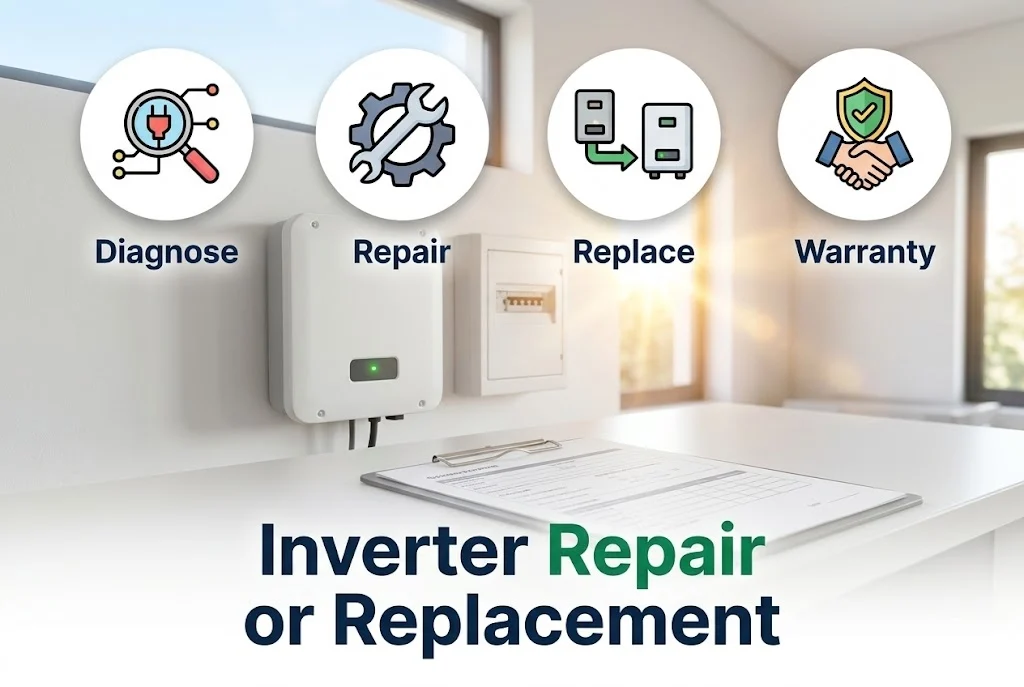
An inverter is the part of a solar system that works hardest and is most likely to fail first. When it does, there are two roads: repair it or replace it. The right one depends on the fault, the age of the unit and what is available.
This guide shows how we think about it.
Key takeaways
- Many faults come from outside the inverter and can be corrected without replacing it.
- Repairs depend on the fault and on whether parts are available.
- Warranty status should be checked before any work.
- Replacing makes sense when repair is not practical or the unit is at the end of its life.
First, find where the fault is
An alarm may point to the inverter while the cause is outside it: a loose connector, a failed panel, a supply problem or heat from poor ventilation. We check those first, because correcting them may be all that is needed.
When repair makes sense
- The fault is a replaceable part such as a fan, a fuse, a relay or a surge protector.
- The inverter is within its useful life and spares are available.
- The cost of the repair is well below the cost of a new unit.
When replacement is better
- The main power board has failed and spares are not available.
- The unit is old and failures keep coming back.
- The unit no longer suits the system, for example after an extension.
- The unit is under warranty and the maker will replace it.
Warranty and records
Before work starts, check whether the inverter is under warranty, because opening it or letting an unauthorised person repair it can affect that. We note the model and the serial number, the fault and the work done, so that you have a record. For the checks that prevent faults, see maintenance checks.
When to call us
Tell us the make, the model and what your inverter shows and we will arrange a visit. Use the contact page, see our repair services, or look at the inverters we supply.


Leave a comment