
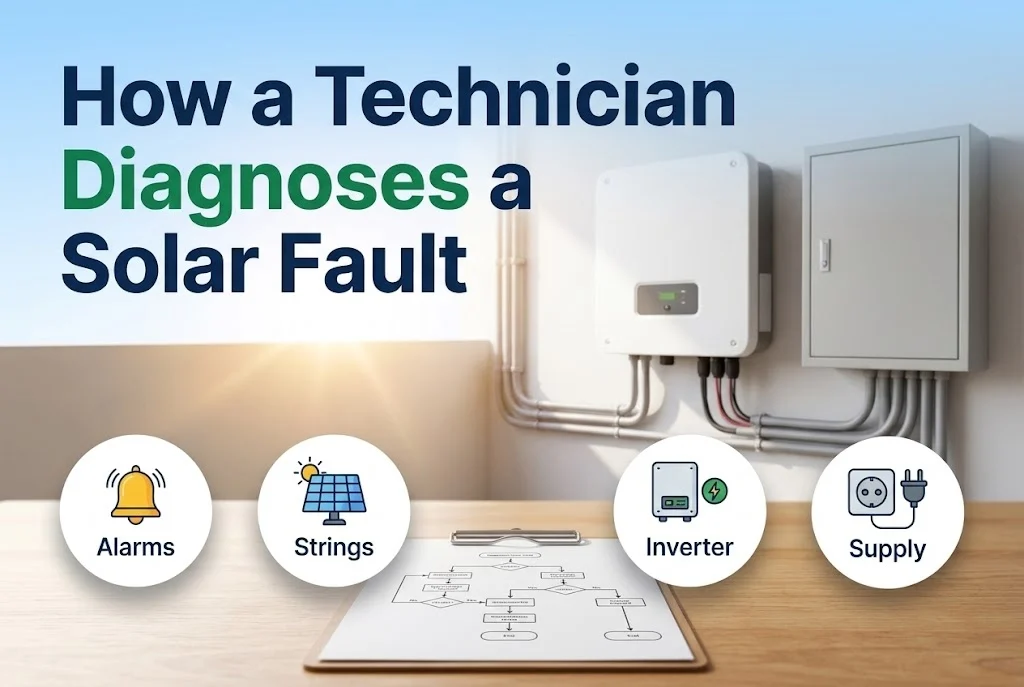
When a solar system stops or makes less power than it should, the cause can be in the panels, the cables, the inverter or the supply. A technician does not guess; the fault is found by working through the system in a set order.
This guide shows what that looks like, so that you know what to expect and what to tell us.
Key takeaways
- Diagnosis starts with what the system shows and what you noticed.
- The panels, the strings, the inverter and the supply are checked in turn.
- Measurements are compared with what the system should give.
- You get an explanation of the cause, not only a repair.
What we ask first
- What the display or the app shows, including any alarm or code.
- When the problem started and whether it came after a storm, a power cut or a change.
- Whether all of the output is lost or only part of it.
- How the production compares with a clear day earlier.
What is checked on site
We look at the panels for dirt, damage, shade and loose connectors, measure the voltage and the current of each string and compare the strings with one another. Then we check the inverter’s alarms and settings, the AC supply and the protection devices, and the earth. A string that gives less than the others points to a panel, a connector or a cable on that string.
Finding the cause
- Read the alarms and the history.
- Check the inputs: the strings and the supply.
- Compare the values with the expected ones.
- Isolate the part that is out of line.
- Test or replace that part and confirm the result.
After the repair
We explain what was wrong and what was done, and, if the cause is a recurring one such as heat or dust, we tell you how to avoid it. A repaired system is recommissioned and watched until its output is as expected. See inverter repair and replacement.
When to call us
If your system has stopped or is making less than it should, tell us what you see and we will arrange a visit. Use the contact page or the quote page, see our repair services, or look at the solar panels we supply.
Leave a comment