
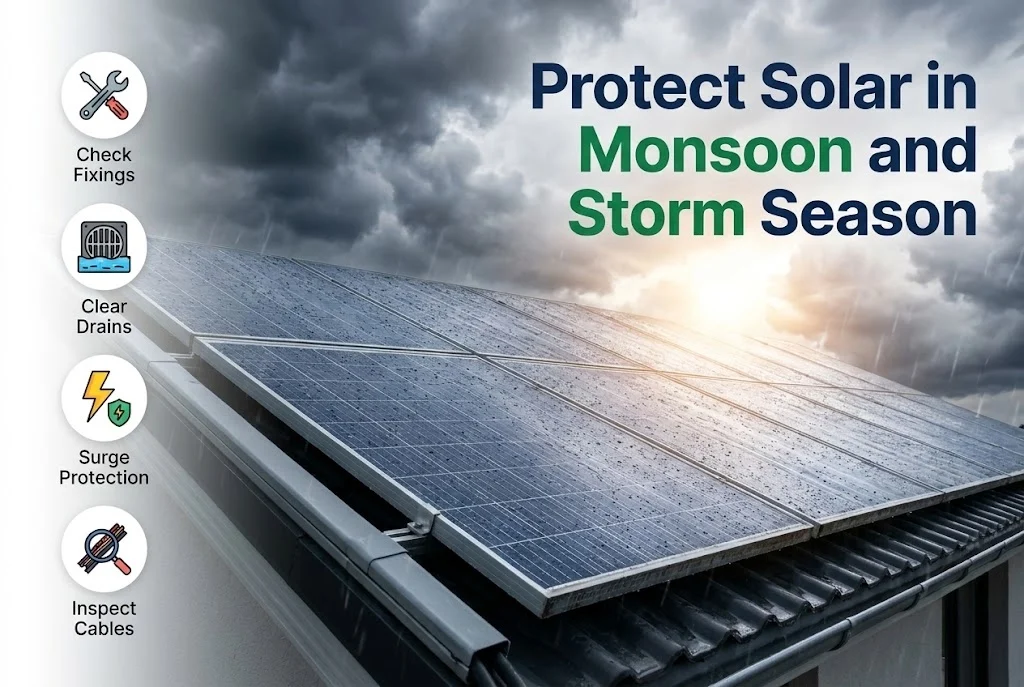
Pakistan sees pre-monsoon dust storms, heavy monsoon rain, strong gusts and lightning. A well-installed solar system is built for this, but a short check before the season, and another after a storm, prevents most problems.
Key takeaways
- Wind is the main mechanical risk: loose bolts, weak frames and untied cables fail first.
- Water causes faults at connectors, junction points and damaged cable insulation.
- Surge protection and good earthing guard against lightning and grid surges.
- After a storm, inspect from the ground and do not climb a wet roof.
1. Before the season: the structure
Check that all bolts and clamps are tight and not rusted, that no panel is loose or lifted at a corner, and that the frames are firmly fixed to the roof. Remove anything on the roof that a gust could throw against the panels, such as loose sheets, tarpaulins or old equipment. See solar mounting structures.
2. Before the season: cables and connectors
Cables should be tied up and off the roof surface, where water can pool, and in conduit where needed. Connectors must be fully engaged and not hanging loose. Water in a connector can cause an insulation fault. Re-tie anything that has come loose and replace damaged cable or connectors through a technician.
3. Before the season: protection and earthing
Check that the surge protection indicators show healthy, that the DC isolator and breakers work and that the earthing connections are tight. Earthing is checked best by a technician with the right tester. Read solar earthing and lightning protection.
4. During a storm
Keep away from the roof and the equipment. You do not need to climb up to switch anything off. If there is flooding near a battery or inverter room, isolate the supply only if it is safe to reach the switch, and call a technician before you restart.
5. After a storm
- Look from the ground or a safe point for moved, cracked or missing panels and for damaged cables.
- Check the inverter and the app for faults. Insulation or earth faults often appear after rain; see solar inverter fault: what to do first.
- After a dust storm, wait for the dust to settle and clean the panels; see solar panel cleaning and maintenance.
- Photograph any damage for insurance or warranty.
6. Batteries and ground-level equipment
Batteries and inverters should be raised off the floor in areas that may flood, and kept dry and ventilated. Make sure drainage works and that rainwater does not run into the equipment room.
Next step
Book a pre-monsoon inspection with us through the contact page or read about our maintenance service.

Leave a comment