Earthing and lightning protection are often confused, and both are often skipped or done badly in cheap installations. They are different things that work together. Doing them properly protects people first, and the equipment second.
Key takeaways
- Earthing connects the metal parts of the system to the ground so that a fault current has a safe path.
- Lightning protection tries to catch or divert a strike; surge protectors protect the electronics from surges on the cables.
- Metal frames, the structure and the inverter case should all be bonded and earthed.
- Earthing should be checked with a tester, at least once a year, before the monsoon.
1. What earthing does
If a cable insulation fails or a panel frame becomes live, an earthed metal part lets the current flow safely to the ground and trips the protection, instead of leaving a dangerous voltage on the frame. A poor earth leaves frames live and surge protectors without a path to work.
2. What should be earthed
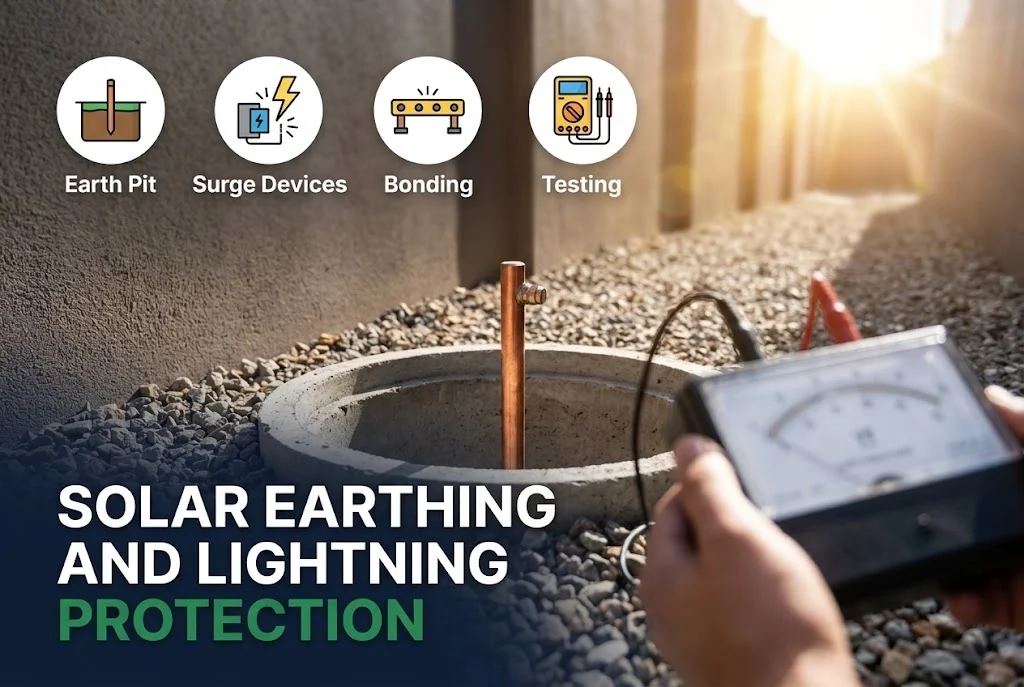
Panel frames, the mounting structure, the inverter case, the DC and AC protective devices, and any metal cable trays or boxes should be bonded together and connected to the earth system, using the correct conductors and clamps. Connections should be tight and protected against corrosion.
3. The earth electrode
The earth electrode is a rod, plate or similar buried in the ground. Its resistance depends on the soil, which is dry and poor in many places, so some sites use several electrodes or treat the soil. The target resistance and the design follow the applicable rules and the equipment maker's guidance; ask the installer to state the measured value.
4. Lightning protection is different
An external lightning protection system, with air terminals and down-conductors, is designed to receive a direct strike and lead it to the ground. Whether a building needs it depends on its height, location and risk. It must be designed by a qualified person. Without it, a nearby or direct strike can still send a surge along cables.
5. Surge protective devices
Surge protective devices (SPDs) on the DC side, the AC side and sometimes the data lines divert surge energy to earth. They wear out after taking surges, and most have an indicator that shows when they need replacing. They only work when the earthing is good. See solar cables and protection devices.
6. A yearly check
- Look at all earth connections for rust and looseness.
- Have the earth resistance measured and recorded.
- Check the SPD indicators and replace any that have operated.
- Do this before the monsoon; see protect your solar system in the monsoon.
Next step
If you do not know how your system is earthed, we can inspect and test it; contact us through the contact page.
Leave a comment