
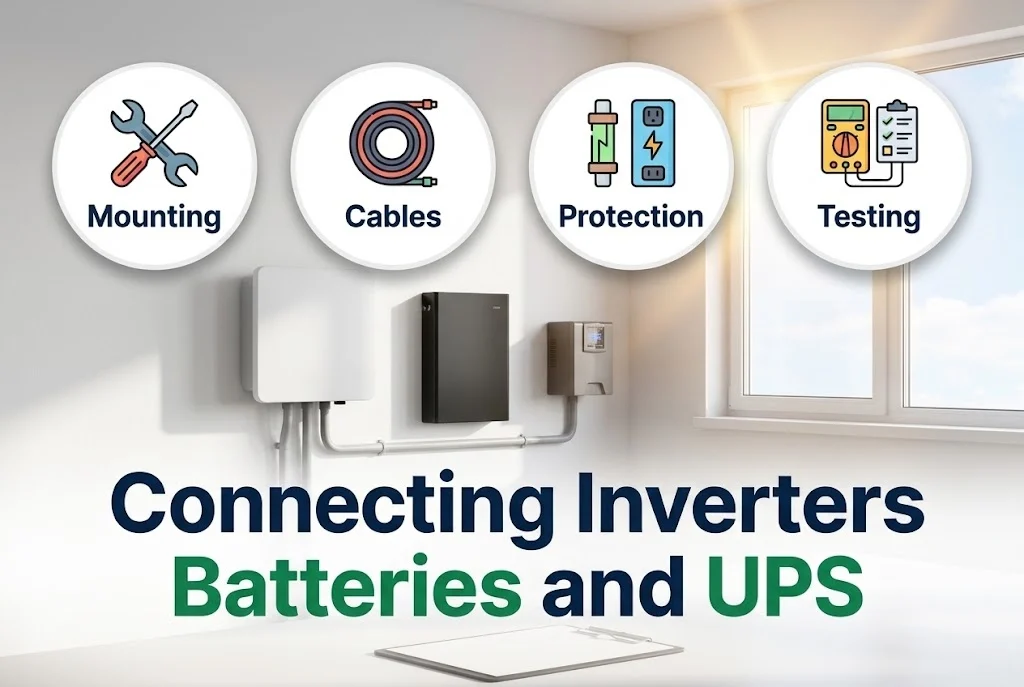
Inverters, batteries and UPS units move large currents, so how they are mounted and wired matters for safety as well as for performance. A loose or undersized connection can overheat long before it fails.
This guide lists the main points of a safe installation.
Key takeaways
- Equipment is mounted in a cool, ventilated place at the height and clearances the maker specifies.
- Cables are sized for the current, and every connection is tightened to its torque.
- Each battery circuit has a protection device.
- The wiring is checked and tested before the equipment is switched on.
Mounting
An inverter or a battery is fixed on a suitable wall or frame, with the clearances and the orientation required by the maker, out of direct sun and away from water. A cool, ventilated place keeps the equipment from derating and lengthens battery life. Batteries need a firm base and a place where they cannot be knocked.
Cables and connections
- Cable size follows the current and the length, so that voltage drop and heating are small.
- Lugs are crimped with the proper tool and the screws are tightened to the torque in the manual.
- Positive and negative are marked and never swapped.
- Cables are run in conduit or trunking and are not left hanging.
Protection
A fuse or breaker rated for the circuit protects the battery cables, and the AC side has its own breaker. A battery can supply a very large current in a short circuit, so the protection must be of the right type and rating, as the battery maker advises.
Testing
We check the polarity, the voltages and the settings of the inverter or the UPS, switch on step by step, and test the changeover by cutting the supply. We then record the results for handover.
When to call us
Our technicians connect and test inverters, batteries and UPS equipment to the maker’s instructions. Use the quote page, see our installation services, or look at the inverters we supply.


Leave a comment