
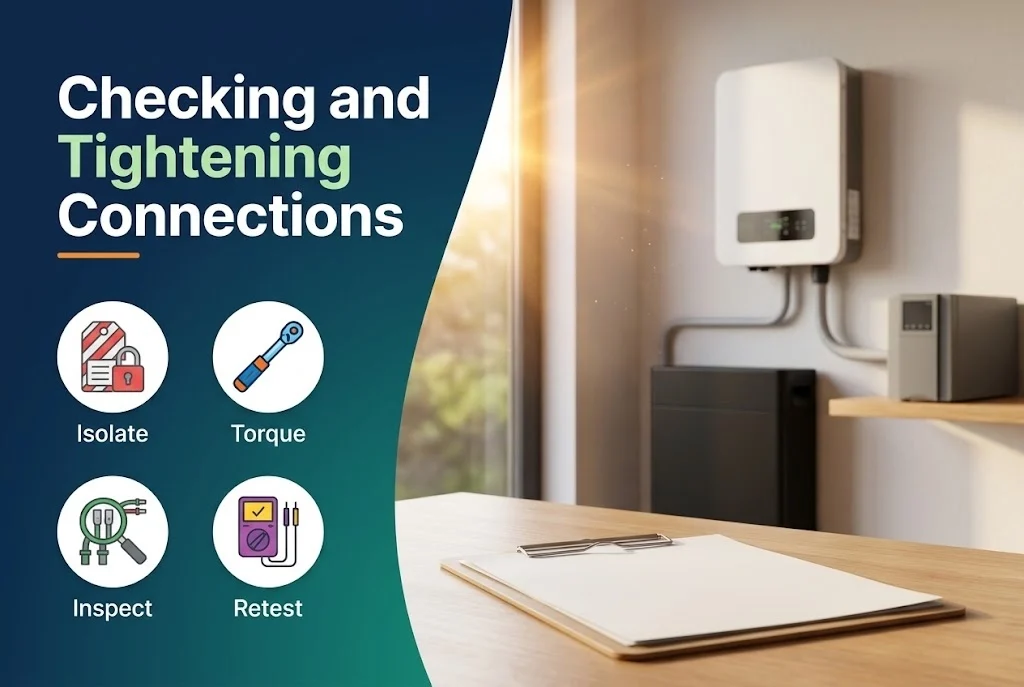
A loose connection has more resistance than a firm one, and when current flows through it, it gets hot. Heat loosens it further, and the cycle can end in a burnt terminal, a tripped system or a fire. Checking and tightening connections is one of the cheapest ways to prevent these faults.
This guide explains how we do it.
Key takeaways
- Loose connections heat up and get worse over time.
- Systems expand and contract with temperature, which loosens screws.
- Connections are checked with the system isolated, then confirmed under load.
- Torque values from the maker are followed.
Why connections loosen
Cables and terminals expand when hot and shrink when cool, and vibration from fans and wind adds to it. Over months and years, screws can back off a little. Aluminium or poorly made lugs can creep. A little looseness is all that is needed to start heating.
How we check
- Isolate and prove the circuit dead before touching anything.
- Look for discoloured insulation, melted plastic and marks around terminals.
- Check each terminal and lug and tighten it to the maker’s torque with a proper tool.
- Check the connectors on the panel strings and the earth connections.
- Switch back on and, where possible, look at the connections under load with an infrared thermometer.
DC and AC sides
On the DC side, connectors must be of the same type and fully pushed home, and cables must be clipped so that they do not pull on them. On the AC side, the breakers, the busbars and the terminals of the inverter and the panel board are checked. Battery terminals are cleaned and checked too.
Why not do it yourself
The work needs isolation, test instruments and the right torque, and a mistake can hurt people or equipment. If you see heat marks, a burning smell or a hot cable, switch off safely if you can and call us. See also earthing and protection.
When to call us
Our technicians check and tighten connections as part of every maintenance visit. Use the contact page or the quote page, see our maintenance services, or look at the mounting structures we supply.


Leave a comment