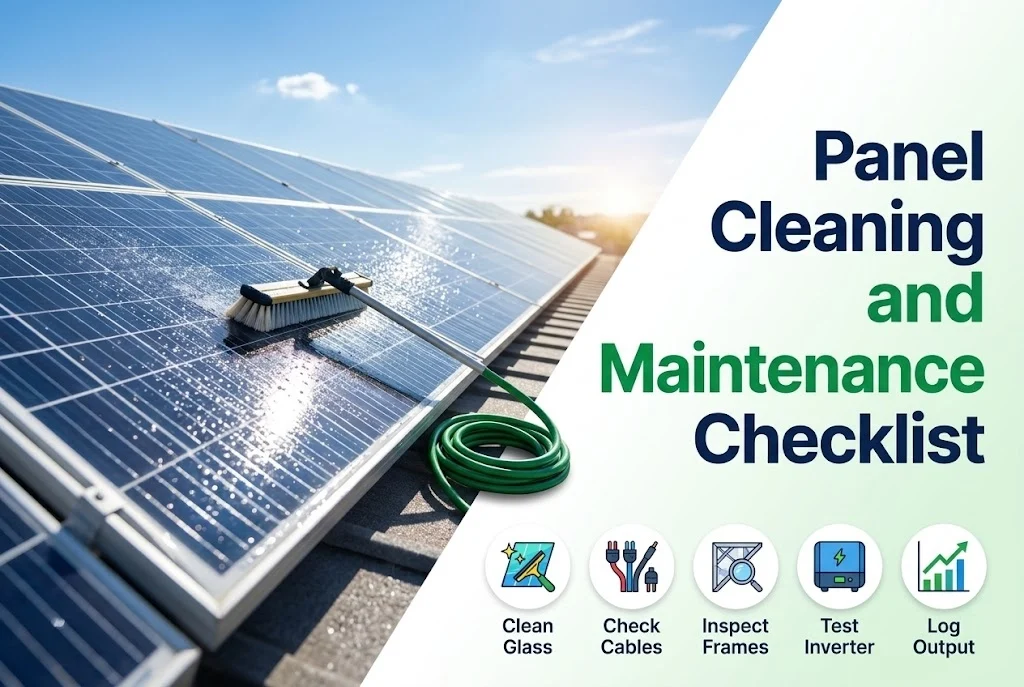
A solar system has no moving parts, but that does not mean it needs no care. Dust, smog, bird droppings, growing shade, loose fixings and ageing connectors all reduce output quietly, and you may not notice until the bill goes up. A few regular checks keep a system producing well and catch small faults before they become expensive. This checklist is written for the dusty, hot conditions of Pakistani cities such as Lahore.
Key takeaways
- Clean the panels when they are dirty, with plain water and a soft tool, when they are cool.
- Watch production through the inverter’s monitoring; a sudden or slow drop is the first warning sign.
- Inspect shade, fixings, cables, the inverter and earthing at least once a year, and the battery more often.
- Safety first: never work on a wet, hot or steep roof without proper fall protection.
How often should solar panels be cleaned?
There is no fixed interval, because it depends on how fast dirt builds up. Panels near construction, busy roads, farmland or factories, and in months of smog or dust storms, get dirty faster than panels in a clean area. Rain washes off some dust but often leaves a film behind. A practical approach is:
- check the panels by eye every few weeks;
- clean when you can see a layer of dust, droppings or leaves;
- compare production on a clear day before and after cleaning, and use that to judge how much cleaning is worth.
How to clean solar panels safely
- Choose the time. Clean early in the morning or in the evening, when the panels are cool. Cold water on hot glass can stress it, and water dries into streaks.
- Use the right tools. Use clean water and a soft brush, a sponge or a squeegee. A telescopic pole with a soft brush lets you work from a safe place.
- Avoid harsh methods. Do not use pressure washers, abrasive pads, scrapers, or strong detergents or solvents, which can scratch the glass or damage the coating and frame seals.
- Use clean water. Very hard water leaves mineral marks; if that is a problem, use softened water.
- Remove stubborn dirt gently. Soak bird droppings first and wipe them off; do not scrub dry.
- Mind the electrics. Do not spray water at the inverter, junction boxes, connectors or cables. Panels are live whenever there is light, so do not handle wiring.
- Protect yourself. Work only where you can do so safely. Do not step on panels, and do not go onto a wet, hot or steep roof without a harness and an anchor point. If in doubt, ask a technician.
Monthly checks
- Look at the production figures in the monitoring app or on the inverter display; compare similar days.
- Check the inverter display for warnings or error codes.
- Glance at the panels and structure for dirt, cracks, bird nests, debris and new shade.
Seasonal checks
- After a dust storm, monsoon storm or heavy wind: look for dirt, loose items, damaged panels and water entering any enclosure.
- Before summer: check that the inverter’s ventilation is clear and its location is shaded.
- Trim trees and clear anything that has started to shade the array.
Yearly inspection by a technician
A qualified technician should inspect the system at least once a year. A typical visit includes:
- Structure: tighten bolts and clamps, look for rust or loose parts, check the roof penetrations and waterproofing.
- Panels: look for cracks, discolouration, hot spots, delamination, damaged frames and loose or damaged connectors.
- Cables: check DC and AC cables for sun damage, rodent damage, chafing, tight lugs and signs of heat.
- Protection and earthing: check breakers, isolators, surge protection and earthing connections, and test where appropriate.
- Inverter: clean vents and filters, check fans and fault history, update settings where needed.
- Performance: compare measured output with what the system should produce, and use thermal imaging or string measurements for faults.
Battery care
- Keep the batteries cool, dry and ventilated.
- Keep terminals clean and tight; look for corrosion, swelling or leaks.
- For flooded batteries, check the electrolyte level and top up with distilled water.
- Make sure charging settings match the battery type; see solar batteries: lithium vs lead-acid.
- Note the battery’s state of charge and any alarms.
Signs that something is wrong
- Production is much lower than similar days before; see why a solar system produces less power.
- The inverter shows a fault code or shuts down repeatedly.
- Panels show cracks, brown or burnt marks, or a part of the array is hot.
- Cables or connectors look melted, chewed or loose.
- There is a smell of burning or a buzzing sound.
Switch the system off safely if you suspect an electrical fault and call a technician; do not try to repair live wiring yourself.
Keep a simple record
Write down the date of each cleaning and inspection, production figures before and after, any faults and any repairs. A record helps you spot trends and helps a technician diagnose problems.
Maintenance with us
We repair and maintain solar and power backup equipment. Tell us about your system and any fault through the contact page or the quotation form, and see our installation, repair and maintenance services.
Leave a comment