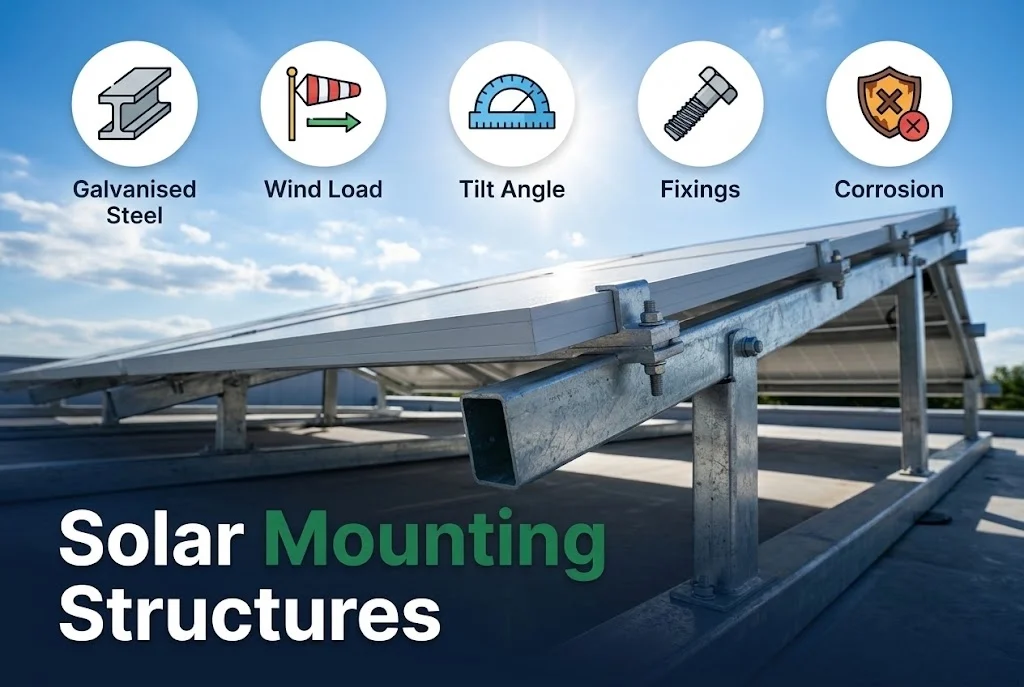
The mounting structure is the least glamorous part of a solar system and one of the most important. It holds the panels at the right angle for 20 years or more through heat, rain, dust storms and wind. A weak structure fails in the first strong gust, and a poorly fixed one can damage the roof.
Key takeaways
- The structure must suit the roof type: flat concrete, sloped, tin sheet or ground.
- Hot-dip galvanised steel and aluminium are common; the coating thickness and bolts matter for corrosion.
- Design for wind, not only for weight, and keep a gap behind the panels for cooling.
- The fixing method must protect the waterproofing of the roof.
1. Flat concrete roofs
On a flat roof the panels are normally tilted on triangular frames. The frames are either bolted to the concrete or held by concrete blocks (ballast), depending on the roof and the rules of the building. Fixings through the roof need proper waterproofing. The tilt and the spacing between rows are set to give a good yearly output without rows shading each other.
2. Sloped and sheet roofs
On tile or sloped roofs, rails are fixed to the roof structure, and panels lie close to the surface. On metal sheet roofs, special clamps hold the rails to the seams or purlins without drilling holes where possible. In all cases the roof must be strong enough to take the extra weight, which is covered in rooftop structural check for solar.
3. Materials and corrosion
Mild steel is strong and affordable, but it must be hot-dip galvanised or otherwise well protected, or it will rust. Aluminium resists rust and is light, but costs more. Bolts, nuts and clamps should be stainless steel or galvanised; a rusted bolt can loosen and fail. Ask for the material, the coating and the thickness in writing.
4. Wind loads and spacing
Wind is the main force on a solar array. A good design considers the local wind speed, the height of the roof and the tilt of the panels. Panels should be fixed with enough clamps and bolts at the right points. Leave a gap between the roof and the panels, and between the panels, so that air can move and cool them. See also protect your solar system in monsoon and storms.
5. What to check on the quotation
- Material, coating and thickness of the frames and the rails.
- Type of bolts and clamps.
- How the structure is fixed and how the roof is kept waterproof.
- Whether it is designed for wind, and for what speed.
- Earthing of the metal frame.
Next step
Ask us to look at your roof before you choose a structure. Contact us through the quotation form or read how we install on the installation page.


Leave a comment