
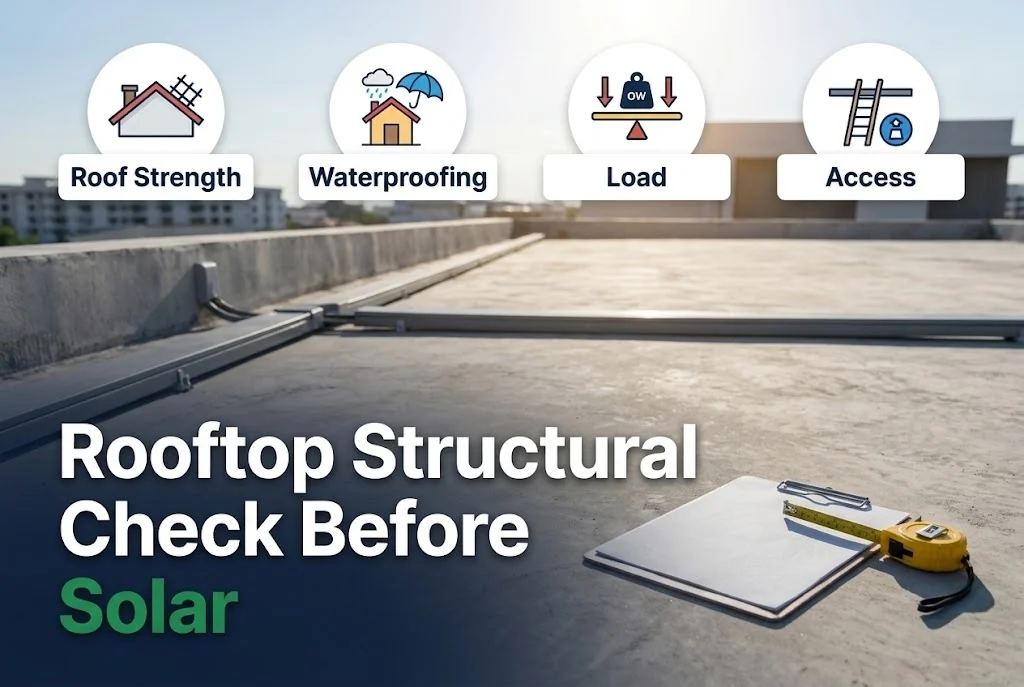
Solar panels are not heavy for their size, but a full array plus its structure adds a load, and wind adds more. Most roofs can take it, but some cannot, and a few need strengthening first. A short check before you order is cheap compared with a repair after.
Key takeaways
- Check the roof type, age, condition and the load it was designed for.
- Wind uplift is often more important than weight, especially on light sheet roofs.
- Fixings must not damage the waterproofing.
- For large or old buildings, ask a structural engineer to give an opinion in writing.
1. Weight
A solar array adds a few tens of kilograms per square metre including the structure and, if used, ballast. A reinforced concrete roof usually handles this well. Old buildings, asbestos or thin sheet roofs, and mezzanines need more care.
2. Wind
Wind tries to lift the array and push it sideways. On a flat roof, the frames are anchored or ballasted for this force; on a sheet roof, the clamps and the purlins carry it. Edge zones and corners see higher wind, so panels near the edge may need extra fixing. See solar mounting structures.
3. Type of roof
- RCC flat roof: strong, but the waterproofing must be kept intact where frames are fixed.
- Metal sheet roof: check the sheet thickness, the purlin spacing and the condition of the screws and rust.
- Tile or sloped roof: check the supporting timber or steel.
- Old or damaged roof: repair first, then install.
4. Waterproofing and drainage
Drilling into a roof can cause leaks. Use proper sealing, upstands and flashing, and keep drains and gutters clear of the frames. If the roof has a warranty, check what the installation does to it.
5. Access and safety
Edge protection, safe ladders and walkways are needed during the work and for later cleaning. Panels should not be the only path across the roof.
6. When to involve an engineer
Ask for a structural opinion when the building is old, the roof is light or damaged, the array is large, or the owner or insurer asks for it. The engineer checks the roof against the load and the wind and states any strengthening. See solar site survey: what we check.
Next step
If you are planning solar on a large or older roof, contact us through the quotation form and we will include the structural check in the survey, or see our installation service.


Leave a comment