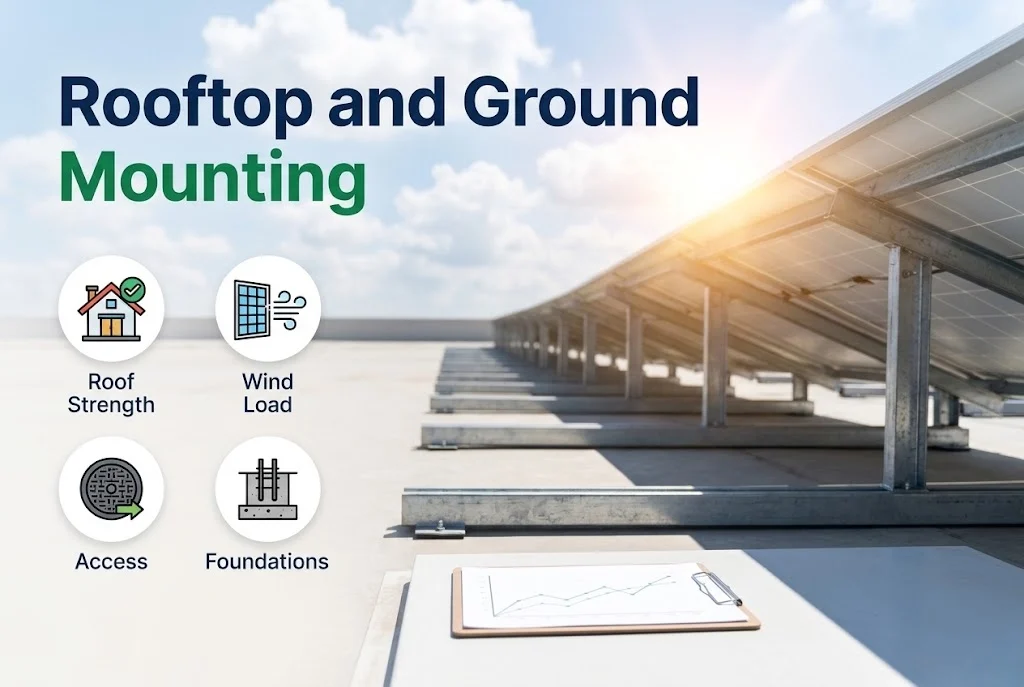
The mounting structure supports solar panels through years of wind, rain, heat and outdoor exposure. For a commercial project, the choice between rooftop and ground-mounted solar depends on the building, available land, electrical connection, access and long-term maintenance requirements. A mounting system should be selected as part of the engineering design, not treated as a minor accessory.
This guide compares commercial solar mounting structures for rooftop and ground installations. It explains the structural and practical factors that affect the choice and what facility owners should check before approving a layout.
Key points
- Rooftop mounting uses existing building space but requires roof and structural assessment.
- Ground-mounted systems need land, foundations, drainage and access.
- Wind uplift and fixing design matter for both options.
- Material, coating and fastener selection should suit the site environment.
- Maintenance access and cable routes must be included in the layout.
1. Rooftop mounting systems
Rooftop mounting places panels on an existing building. It can make use of unused roof area and keep the solar plant close to the building’s electrical infrastructure. However, the roof construction and condition determine which mounting methods are suitable.
Concrete roofs, metal sheet roofs and insulated sandwich panels need different fixing details. The survey should identify the supporting structure, waterproofing, drainage, roof warranty and any fragile surfaces. A roof that appears strong from ground level may still need engineering review.
2. Ground-mounted mounting systems
Ground-mounted arrays use support frames fixed to foundations or other engineered bases. They may be suitable where the facility has open land or where the roof is unsuitable. The layout can provide better access and allow the array orientation and tilt to be selected independently of the building.
Ground-mounted projects require land assessment, soil information, foundation design, drainage, access roads and often fencing. Cable routes to the electrical connection point may be longer than for a rooftop array. The land must also be available for the expected project life and not conflict with future site development.
3. Structural loads and wind design
Both rooftop and ground-mounted structures must resist the weight of the modules and mounting components as well as wind pressure and uplift. Wind forces depend on location, building height, array position, panel tilt, row spacing and surrounding exposure. The structural design should use appropriate project assumptions and engineering standards.
For rooftop systems, loads must transfer safely into the building structure. For ground-mounted systems, forces transfer through posts and foundations into the soil. Do not rely on a generic weight-per-square-metre figure to approve either arrangement.
4. Roof fixings and waterproofing
Penetrating roof fixings must be designed to preserve the roof’s weatherproofing. The fixing method should suit the roof material and connect to the appropriate structural member. Poorly sealed penetrations can lead to leaks and building damage.
Ballasted or non-penetrating systems avoid some roof holes but can add concentrated weight and require careful wind design. The choice should account for roof capacity, warranty conditions and maintenance access. Ask for a clear fixing detail and identify who is responsible for any roof repair work.
5. Foundations and ground conditions
Ground-mounted structures may use concrete foundations, driven piles or other engineered support systems depending on soil and site conditions. Foundation selection should consider soil strength, groundwater, corrosion exposure, drainage and wind loads. The layout should also account for slope and any risk of erosion or water accumulation.
Do not assume that a standard foundation detail is suitable for every site. Larger projects may need geotechnical information and structural calculations. The foundation design should be documented and inspected during construction as required.
6. Materials: aluminium and steel
Aluminium profiles are often used for rails and lighter mounting components because of their weight and corrosion characteristics. Steel may be used for larger support frames or ground-mounted structures where strength and span requirements justify it. Material grade, profile geometry and coating are more important than a generic material label.
Check galvanising or coating specifications, cut-edge treatment, fastener compatibility and corrosion protection. Coastal or industrial environments may require additional consideration. Dissimilar metals should be assessed for galvanic corrosion where they come into contact.
7. Panel tilt, orientation and row spacing
Panel tilt and orientation affect energy generation and the space required. Ground-mounted rows need spacing to reduce self-shading and allow maintenance access. Rooftop layouts must fit around parapets, vents, skylights and building services. The design should balance panel count, shading, wind loads and practical access.
Do not maximise the number of modules at the expense of drainage or maintenance. The final layout should be based on a site-specific energy model and structural review where required.
8. Corrosion and environmental conditions
Mounting components are exposed to moisture, heat, dust and sometimes industrial chemicals or coastal air. The material and coating should suit the environment. Inspect for coating damage, corrosion, loose fasteners and movement as part of maintenance.
For industrial roofs, airborne dust or fumes may affect both the modules and the mounting system. Choose components with documented suitability for the site’s conditions and follow the manufacturer’s installation and maintenance instructions.
9. Cable routing and electrical integration
Mounting design should include secure cable routes from the array to inverters and electrical equipment. Cables should be protected from abrasion, UV exposure, standing water and mechanical damage. Ground-mounted arrays may need underground or protected cable routes and suitable access for inspection.
Consider the distance to the point of connection and the impact on voltage drop and installation cost. Keep cable routes clear of vehicle movements and future construction. Electrical protection and earthing must be coordinated with the overall system design.
10. Maintenance access and site operations
Rooftop arrays need safe roof access, fall protection and routes to equipment. Ground-mounted arrays need access for cleaning, vegetation control and inspection. Commercial sites should coordinate maintenance with security, operations and other facility work.
Leave clearance around drains, fire routes, plant rooms and emergency access. A structure that prevents safe inspection may increase long-term maintenance cost and risk. Plan for module replacement and cable inspection before installation begins.
11. How to choose between rooftop and ground mounting
Rooftop mounting may be suitable where the roof is structurally sound, has enough usable area and provides acceptable access. Ground mounting may be preferable where land is available and roof conditions or building operations make rooftop work difficult. The final choice depends on structural cost, land use, cable distance, shading and site constraints.
Compare the complete project cost and operating requirements rather than only the price of rails or foundations. Include structural assessment, civil work, access, cable routes and maintenance in the decision.
12. What to request from the mounting supplier
- Material grade, profile dimensions and coating details.
- Structural design assumptions and wind-load calculations.
- Roof fixing or foundation details.
- Fastener type, spacing and installation torque.
- Panel clamp zones and permitted module orientation.
- Waterproofing, drainage and maintenance access details.
Commercial solar mounting across Pakistan
Atiq Traders provides solar system design, supply, installation and technical support for commercial and industrial customers across Pakistan. Mounting selection depends on the roof or land, module model, structural conditions, wind exposure and site requirements.
To arrange a site assessment or request a quotation, use the quotation form or contact us through the contact page. You can also review our installation services, solar solutions and maintenance services.


Leave a comment