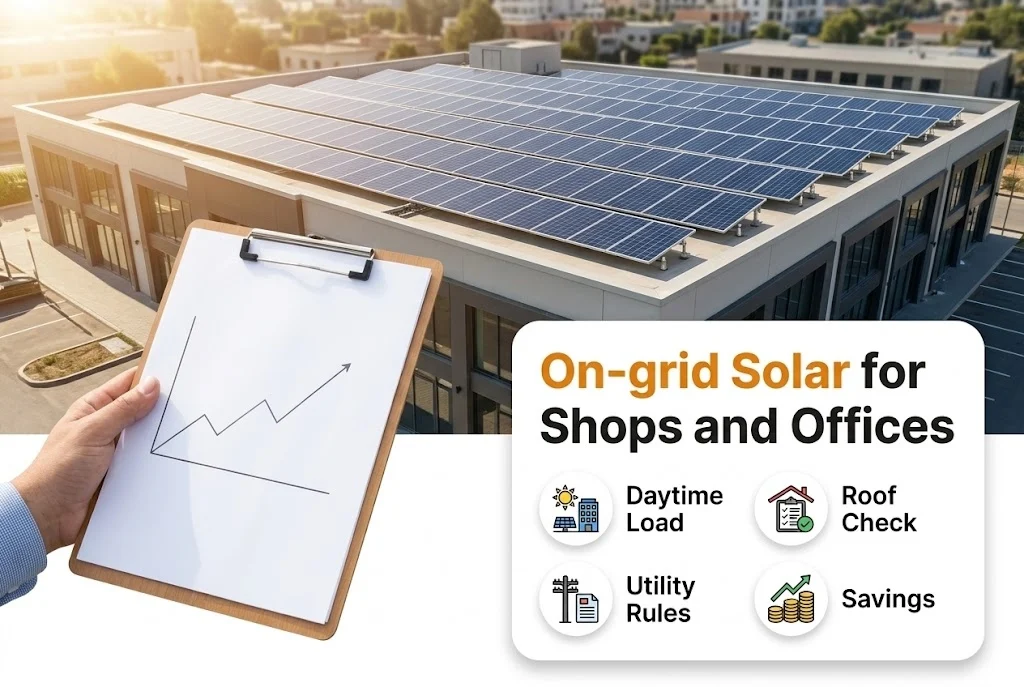
A shop, an office or a plaza uses most of its power while it is open, which is also when the sun is strongest. That match is why an on-grid solar system, a system without batteries, is the most common first step for a business.
The system supplies the building first and the utility covers the rest, so the bill falls without any change to how the building is run.
Key takeaways
- Daytime opening hours match the hours when solar makes power.
- The system is sized from the daytime load, not from the roof alone.
- An on-grid system shuts down when the utility fails.
- The roof, the electrical connection and the utility’s rules are checked before the design.
Why daytime use matters
Every unit that the panels make while the building is using power is a unit you do not buy. Power made when the building is closed is worth less, because it can only go back to the utility where the rules allow it. A system sized to the daytime load therefore gives the best use of the panels.
How the size is chosen
We look at your electricity bills and, where possible, at the pattern of use over a day: air conditioning, lighting, refrigeration, lifts, pumps and office equipment. The size is then set so that the panels cover a good share of the daytime load without making much surplus.
- Bills for several months, because use changes with the season.
- The main loads and when they run.
- The usable roof area and its direction.
- The size of the supply connection.
What happens in a power cut
An on-grid inverter stops when the utility fails, so the building has no solar power during an outage. If key loads such as tills, servers or lights must stay on, a hybrid system with batteries is the better choice, or the system can be kept on-grid and paired with a UPS.
What we check before the design
- The roof: type, strength, waterproofing, shade and access. See rooftop and ground mounting.
- The electrical room: space for the inverter and the protection devices, and the condition of the main panel.
- The utility’s rules for connecting and metering a solar system.
- The cable route from the roof to the inverter.
When to call us
Tell us about your building and we will check the roof, the load and the connection and give you a quotation. Use the quote page, see our commercial solar solutions, or look at the solar panels and inverters we supply.
Leave a comment